Thursday, December 13, 2012


Wednesday, December 12, 2012
The muddy waters of this world By Favell Lee Mortimer
 |
| photo (Favell Lee Mortimer, "Family Devotions") "Everyone who drinks this water will thirst again." John 4:13 There is a defect in all earthly pleasures and comforts--they seem to satisfy us for a little while, but soon the tormenting thirst returns. Have we not often experienced the truth of this? We have partaken of some pleasure, and have felt satisfied--but O how short was our satisfaction! We soon become restless and uneasy again. Thus we continue to thirst until we are made partakers of the Holy Spirit--then we feel satisfied. Then we find within ourselves a source of happiness. What is this source of never-failing delight? It is the sense of pardoned sin, of God's love in Christ, the hope of heaven, and of meeting our Redeemer there. Have you not heard of people racked with pain, who yet enjoyed a peace that passes all understanding? Perhaps you have seen such people, and have wondered at their case. Behold the mystery explained! They drank, indeed, of no stream of earthly comforts, but there was in them a well of water springing up that never could be exhausted, and therefore they did not thirst after the muddy waters of this world. "Please, sir give me some of that water! Then I'll never be thirsty again!" John 4:15 |
A Glimpse That Strengthens By Theodore Epp

By Theodore Epp
Job 1:6-11
In the first two chapters of the Book of Job, God gives us a look behind the scenes so that we can see events on earth from the standpoint of heaven.
There is no doubt that if Job could have seen into the councils of heaven before and during his trial, he would have answered his friends quite differently. But God did not allow him to know about this heavenly scene presented to us.
Nor did God explain it to him at the close of his experiences. He may have learned about it after he went to heaven but not before.
God's eternal purpose for Job would have been thwarted if Job had been given the explanation for his trial. If he had known all that went on behind the scenes in heaven, there would have been no place for faith.
Without faith, Hebrews 11:6 tells us, it is impossible to please God. Job could never have been purified, as gold is purified by fire, if he had not gone through the situation in which he had to trust God implicitly.
God has permitted us to see these things to help strengthen our faith when we face baffling afflictions. His purpose is that we might place implicit faith in Him and in His counsel and His goals for us, believing that the hard experiences in life are permitted for a good purpose.
This is the teaching of Romans 8:28,29: "All things work together for good" for the believer.
"For our light affliction, which is but for a moment, worketh for us a far more exceeding and eternal weight of glory" (2 Cor. 4:17).
Power Given to the Faint by J. C. Philpot
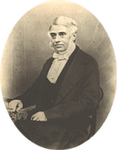
Preached at Zoar Chapel, London, on July 20, 1845, by J. C. Philpot
"He gives power to the faint; and to those who have no might he increases strength. Even the youths shall faint and be weary, and the young men shall utterly fall; but those who wait upon the Lord shall renew their strength; they shall mount up with wings as eagles; they shall run, and not be weary; and they shall walk, and not faint." Isaiah 40:29-31
In order to understand the mind and meaning of the Holy Spirit in these words, we must take a glimpse at their connection.
We find, in the preceding verses, the Lord addressing himself to his people, and speaking to them as deeply exercised in their souls. But what was the source of their exercises? It was this--that their path was so dark and obscure. "Why do you say, O Jacob, and speak, O Israel, my way is hidden from the Lord, and my judgment is passed over from my God?" The path in which the family of God were then walking was exceedingly perplexing. Their "way"--that is, the path they were taking--the way of the Spirit's teaching in their conscience--the mode of the Lord's dealing with their soul, was so intricate and obscure, that they could not believe it was a right way.
The Lord had hidden his face from them, and did not show them the nature or reason of his dealings with them. Infidelity, seizing hold of this circumstance, worked so powerfully in their hearts, that they burst forth into this cry, "My way is hidden from the Lord." Surely he cannot see the way I am taking, or he would have appeared sooner on my behalf. "And my judgment," that is, my cause, "is passed over from my God." He neglects to take that notice of me which I seek at his hands; he passes me by as unworthy of his regard; he slights my cause, and rejects my prayer, as though I did not belong to him.
Now, in order to meet these exercises in the hearts of his people--in order to apply a suitable remedy for these workings of unbelief and infidelity--the Lord answers by appealing to their own experience--"Have you not known, have you not heard, that the everlasting God, the Lord, the Creator of the ends of the earth, faints not, neither is weary?" However you may faint, however you may be wearied of him--whatever be your hard thoughts concerning his dealings with you--do you not know, that the everlasting God remains "the same yesterday, today, and forever"--that he is not a changeable God, tossed to and fro like yourself; but that he "rests in his love," and is ever the same--that "he faints not" under the burdens which you cast upon him; "neither is weary" of you, though you are often weary of him? And, with respect to this intricate path in which you are walking, he adds, "No one can measure the depths of his understanding." He knows what is best for you; and though your present path is dark and obscure in your eyes, it is bright and clear in his.
He would, therefore, urge this upon the conscience of his exercised and complaining child, 'Your part is to sit still, and wait until the deliverance appear; in due time, I will explain to you the nature and reason of these mysterious dealings.' He then goes on still further to clear up the point by the words of the text--"He gives power to the faint; and to those who have no might he increases strength. Even the youths shall faint and be weary, and the young men shall utterly fall--but those who wait upon the Lord shall renew their strength; they shall mount up with wings as eagles; they shall run, and not be weary; and they shall walk, and not faint."
If we look at the text, we shall observe, that there are two characters traced out in it. Of these, one is set forth by the expression "youths" and "young men." And not only is their character set forth, but also their destiny is described that they "shall faint," and "shall utterly fall." And, on the other hand, we have another, a spiritual character traced out, as one who "has no might," and yet "waits upon the Lord." And we find his destiny also pointed out. For as there is an end reserved for the one--an utter fall; so there is an end reserved for the other--a spiritual blessing.
I shall, then, if God enable me, endeavor this morning to trace out these two distinct characters, and show the allotted portion and end of each.
We will begin with a description of the character pointed out by the expression "youths" and "young men;" and then show what is their allotted portion and appointed destiny.
I. By the expression "youths" and "young men" is implied a contrast between the whole-hearted condition of the professing world and the fainting state of God's family. Youth is the season of loveliness, vigor, and strength; and thus, figuratively and typically, the "youths" and "young men" are those professors of religion who have never been weakened and brought down by a work of the Spirit upon their hearts; but who retain all their natural loveliness, activity, and vigor. In the exercise of this activity and strength, these youths run a race, but not the race that God's people run in faith and patience. In a word, the expression "youths" and "young men" describes unburdened professors, who have never had such a work of grace upon their hearts as has laid trouble upon their souls, or wrought penetrating convictions in their conscience. Never having been humbled in their souls, nor exercised in their minds, nor afflicted by a body of sin and death, they retain all their natural vigor. It has never been drawn away from them by the running sores of sin and guilt; they have never been drained nor exhausted of it by lacerating wounds in their conscience; and they thus preserve all that loveliness, youthful vigor, and beauty which have been battered down in the Lord's afflicted family.
Now when the Lord's people, exercised and tried in their souls, compare their deformity, ugliness, and wrinkles, with the loveliness of these unhumbled professors, it is often to them a bitter contrast. They often see in unexercised professors much more zeal, consistency, earnestness, amiability, activity, and apparent devotedness, than they can see and feel in their own hearts; and, contrasting their own wrinkled and weather-beaten visages with the smooth and glowing cheeks of others, they cry out, "My skin is black upon me; my flesh is clothed with worms and clods of dust--my skin is broken and become loathsome" Job 30:30
And so with respect to the activity, strength, and vigor of these "youths" and "young men." The Lord's people have often no heart to "run with patience the race that is set before them." Spiritual things, instead of being their solace and delight, are often their burden. The enmity of their carnal mind works up against divine realities; and so far from being active and zealous in them, they are often so burdened in the things of God, that they feel unable to do any one thing which is acceptable in His sight. But these "young men," who have never seen the breadth, nor felt the spirituality of God's law--who have never known their inward corruption, never been plagued with a body of sin and death, never exercised with the perplexities that God's people are tried with--retain all that zeal and loveliness--those fleshly substitutes for vital power and godliness--which the exercised family of God once had, but have long lost.
There are those among the Lord's family "whose senses are not as yet exercised to discern both good and evil," and therefore cannot see the difference between pretense and reality, between 'nature in its highest form' and 'grace in its lowest form'. When therefore one of these poor, burdened, exercised children of God contrasts his own lack of zeal, earnestness, and activity--his darkness of mind, deadness of soul, and coldness of affection--with the earnestness and activity of many a zealous religionist around him, he is almost tempted to think that they are right and he wrong, and that they will stand when he shall fall.
But how different are God's ways from our ways, and God's thoughts from our thoughts! How differently does he view these "youths" and "young men" from the admiration bestowed upon them by the professing world! What hollowness, deceitfulness, and hypocrisy does he see working under all this natural loveliness, strength, and vigor! How the Lord sees that all this strength is weakness, all this wisdom is folly, all this righteousness is hypocrisy, and all this earnestness and zeal is but fallen nature carrying into religion the same restless activity which cultivates the farm, or manages the shop--a buyer and seller in the temple, and not a spiritual worshiper in the sanctuary!
But what is the sentence which the Lord has passed concerning such? A sentence that we see, more or less, fulfilled every day. They shall all "utterly fall." In due time these lovely and vigorous "youths," these strong and active "young men" will faint and fall. Though for a time they seem to run well, they never reach the goal. Sin, which for a time was dead in them, begins to revive; temptations that before never beset them, are laid in their paths; snares before hidden, they are now entangled by--their zeal, their earnestness, their activity gradually decline; and thus, long before they come to the end of the race, they faint, and are utterly unable to proceed any further. They give up their religion, often abandon even a profession, go back into the world, fall into sin, and "concerning faith make shipwreck."
The Wrong Kind of Teachers By A.W. Tozer

By A.W. Tozer
The newborn Christian finds himself alive with a sweet, enjoyable kind of life that he accepts naively, almost unconsciously. To him everything is simple and immediate. He knows no intermediary. Christ is to him on an infinitely higher level what its mother is to a baby--warmth, nourishment, protection, rest and an object of satisfying affection.
Right here is where the wrong kind of Bible teacher can do his damage. The first thing he does is to destroy the new Christian's simplicity. He introduces something between the Christian and Christ. He makes him Biblo-centric instead of Christo-centric. (And there is a difference, let no one deceive you.)
The Spirit-anointed Bible teacher will so teach the Word as to keep it transparent, so as to allow it to be what it always should be, a kind of burning bush which God indwells and out of which He shines in awesome splendor. The beholder sees the bush, it is true, but the object of his interest is the Presence, not the bush. The wrong kind of teacher gets so technical about the bush that the fire dims down and the light ceases to fall on the Christian's face.
That is what the gentle cynic meant when he said "before he has met too many Bible teachers."
As for "too many church members" spoiling the new Christian's happiness, it is the result of disillusionment pure and simple.
I know everything about every one of them By J. C. Ryle
 |
| photo
(J. C. Ryle, "The Privileges of the True Christian")
"My sheep hear my voice, and I know them,
and they follow Me." (John 10:27)
The Lord Jesus Christ says of His sheep who hear His
voice and follow Him, "I know them." I know . . .
their number,
their names,
their particular characters,
their besetting sins,
their troubles,
their trials,
their temptations,
their doubts,
their prayers,
their private meditations.
I know everything about every one of them!
Be comforted, all you who are tried and buffeted
with difficulties in your way towards heaven,
difficulties from without and difficulties from within,
difficulties abroad and difficulties at home, grief for
your own sins and grief for the sins of others--the
Good Shepherd Jesus knows you well, though you
may not realize it.
You never shed a secret tear over your own corruption,
you never breathed a single prayer for forgiveness and
helping grace, you never made a single struggle against
wickedness--which He did not observe and note down in
the book of His remembrance.
You need not fear His not understanding your needs.
He knows your particular necessities far better than
you do yourselves. Your humble prayers are no sooner
offered up than heard. You may sometimes sigh and
mourn for lack of Christian fellowship--but remember
that the Good Shepherd is ever about your path and
about your bed. His eyes are on all your movements.
No husband, brother, father, mother, sister, friend,
could take more tender interest in your soul's welfare
than He does. If you sorrow He will bind up your
broken heart and pour in balm. He is ever watching
and observing and listening. The Good Shepherd is
acquainted with all your ways.
|
The Bias Of Degeneration By Oswald Chambers

'Wherefore as by one man sin entered into the world, and death by sin; and so death passed upon all men, for that all have sinned.'
Romans 5:12
The Bible does not say that God punished the human race for one man's sin; but that the disposition of sin, viz., my claim to my right to myself, entered into the human race by one man, and that another Man took on Him the sin of the human race and put it away (Heb. 9:26) - an infinitely profounder revelation. The disposition of sin is not immorality and wrong-doing, but the disposition of self-realization - I am my own god.
This disposition may work out in decorous morality or in indecorous immorality, but it has the one basis, my claim to my right to myself. When Our Lord faced men with all the forces of evil in them, and men who were clean living and moral and up right, He did not pay any attention to the moral degradation of the one or to the moral attainment of the other; He looked at something we do not see, viz., the disposition.
Sin is a thing I am born with and I cannot touch it; God touches sin in Redemption. In the Cross of Jesus Christ God redeemed the whole human race from the possibility of damnation through the heredity of sin. God nowhere holds a man responsible for having the heredity of sin. The condemnation is not that I am born with a heredity of sin, but if when I realize Jesus Christ came to deliver me from it, I refuse to let Him do so, from that moment I begin to get the seal of damnation. "And this is the judgment" (the critical moment), "that the light is come into the world, and men loved the darkness rather than the light."
Why would God want ME?
 |
image
Author Unknown I'm not perfect. I have all kinds of problems. I have no ability. I have no gifts. I'm just not worthy. Why would God want me? Well, did you know that Moses stuttered. David's armor didn't fit. John Mark deserted Paul. Timothy had ulcers. Hosea's wife was a prostitute. Amos' only training was in the school of fig-tree pruning. Jacob was a liar. David had an affair. Solomon was too rich. Jesus was too poor. Abraham was too old. David was too young. Peter was afraid of death. Lazarus was dead. John was self-righteous. Naomi was a widow. Paul was a persecutor of the church. Moses was a murderer. Jonah ran from God's will. Miriam was a gossip. Gideon and Thomas both doubted. Jeremiah was depressed and suicidal. Elijah was burned out. John the Baptist was a loudmouth. Martha was a worry-wart. Noah got drunk. Did I mention that Moses had a short fuse? So did Peter, Paul - well, lots of folks did. But God doesn't require a job interview for salvation. He's our Heavenly Father. He doesn't look at financial gain or loss. He's not prejudiced or partial, not judging, grudging, sassy, or brassy, not deaf to our cry, not blind to our need. He know who we are and what we are and loves us in spite of ourselves SATAN SAYS, "YOU'RE NOT WORTHY." JESUS SAYS, "SO WHAT? I AM." SATAN LOOKS BACK AND SEES OUR MISTAKES. GOD LOOKS BACK AND SEES THE CROSS. He doesn't calculate how you failed in '99. It's not even on the record. Sure, there are lots of reasons why God shouldn't call us. But if we are in love with Him, if we hunger for Him, He'll use us in spite of who we are, where we've been, what we have done, or the fact that we are not perfect! |
Subscribe to:
Posts (Atom)